
Learning to Say “No”: How Art Therapy Can Help NDIS Participants Speak Up and Set Boundaries
 Prefer MySolas


Insight Description
Have you ever said “yes” when you really wanted to say “no”?
Maybe you agreed to plans you didn’t want to be a part of. Maybe you let someone else decide for you. Or maybe you stayed quiet, then felt upset about it later.
If that sounds like you, you are not alone. And here is the good news: speaking up is a skill. Skills can be practised.
One of our clients Emily used to feel the same way. After 39 sessions of Creative Arts Therapy with us, she said:
“I now can say the word ‘no’ without feeling guilty or scared to say how I feel.”
Creative Arts Therapy gives you a safe place to practise speaking up, before you need to do it in real life.
Introducing Self-Advocacy.
Self-advocacy means speaking up for yourself. It means saying what you want, what you need and what you don’t want.
It can look like:
- Saying “no” to something that doesn’t feel right.
- Asking for help when you need it.
- Telling someone how you feel calmly and confidently.
- Choosing what happens in your own day.
Under the NDIS, this is part of choice and control: your right to make decisions about your own life and supports.
Why Can Saying “No” Feel So Hard?
For many people, saying “no” brings up big feelings. You might:
- Worry that people will be upset with you.
- Feel guilty, even when you know your answer is right.
- Not know which words to use.
- Freeze, or feel your body go tense.
- Be used to other people making choices for you.
- Find it easier to show feelings than to say them.
None of this means something is wrong with you. It means you haven’t had enough safe chances to practise. That is where therapy can help.
What Is Creative Arts Therapy? (You Don’t Need to Be Good at Art)
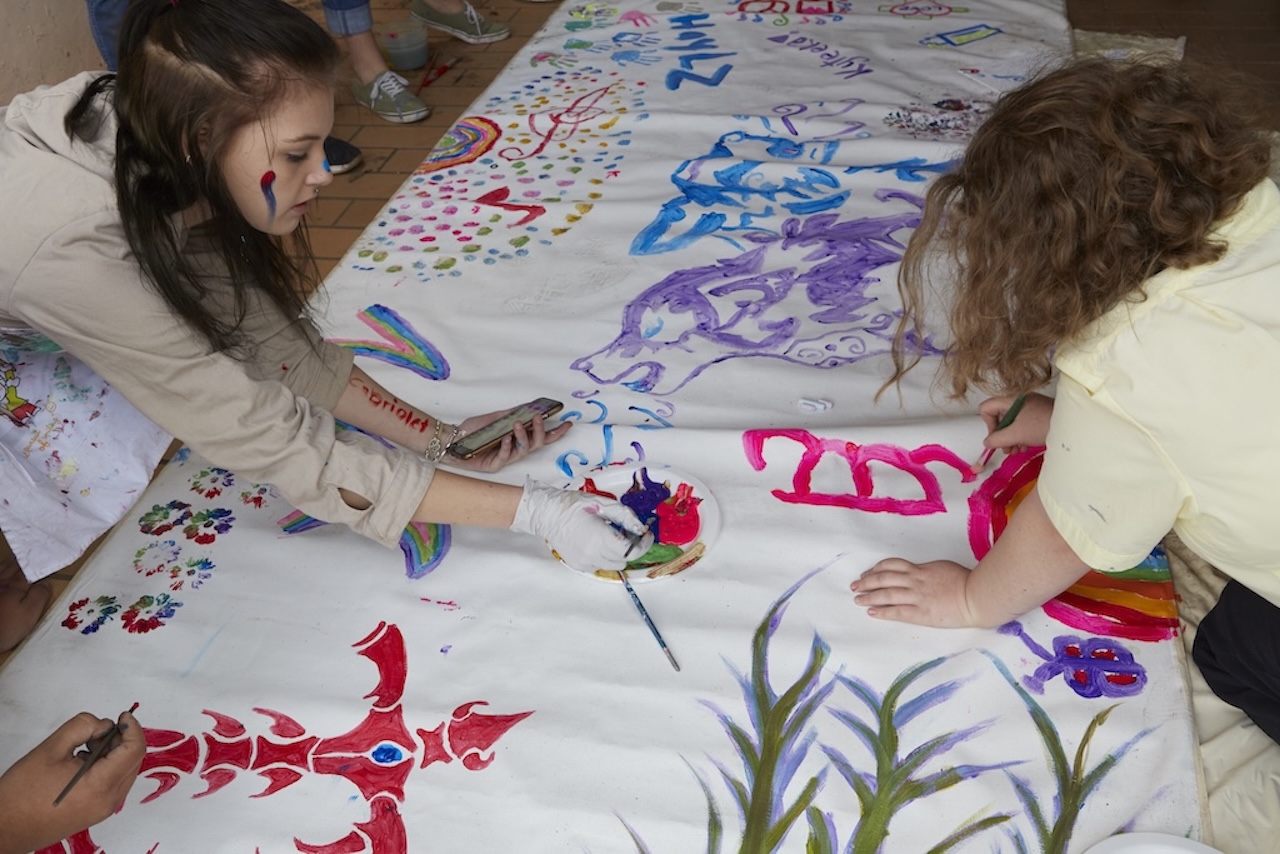
Creative Arts Therapy uses creative activities to help you explore your thoughts and feelings. At CATA, this can include:
- Visual arts: drawing, painting, collage.
- Drama therapy: role play and storytelling.
- Music therapy: sound, rhythm and song.
- Dance and movement therapy: using your body to express yourself.
You do not need any art skills. Nobody is marking your work. What matters is how you feel while you create, not what it looks like at the end.
Your therapist is a qualified professional. They guide the session, and you stay in charge of what you share.
5 Ways Creative Arts Therapy Can Help You Speak Up
1. You can practise before the real moment
In drama therapy, you can act out a hard conversation with your therapist. You can try different words, stop, and try again. It’s like a rehearsal, with no pressure.
This is how Emily practised. She used role play to rehearse saying “no” in different situations.
2. You can find your feelings before you find your words
Sometimes you know you feel something, but you can’t name it yet. Drawing a shape, picking a colour or moving to music can help you notice what’s going on inside. Once you can see a feeling, it gets easier to talk about.
3. You can tell your story your way
Storytelling helps you look at your own experiences from a new angle. You might create a character who speaks up, or tell a story where you set the rules. Your story stays yours.
4. You get to make choices in every session
You choose the materials. You choose how to start. You can ask for a break. Every small choice is practice for the bigger ones.
And yes, you can say “no” in therapy too. Your therapist will respect it.
5. You take your skills into everyday life
The goal isn’t to be confident in the therapy room only. It’s to feel confident at home, at work, with friends and with your supports. Your therapist will help you plan how to use what you learn in your real week.
Emily’s Story: From Guilt to Pride
Emily was a lovely client of ours, she’s a young woman with an NDIS plan. She often agreed to things that went against what she wanted, just to avoid upsetting others.
Her goal was simple and powerful: to speak up for herself and set boundaries.
Emily started therapy online, then moved to in-person sessions at CATA. Through role play, creative expression and storytelling, she practised saying “no” in different situations.
Over time, she began using those skills in her everyday life. She told us:
“I am so proud of myself for being able to do this and it’s because I have been in Creative Art Therapy for a while.”
Emily is a pseudonym. Read Emily’s full case study.
Does Emily’s story feel familiar? Ask us a question. There’s no pressure to book.
Try This: 3 Questions to Ask Yourself
You don’t need to have everything worked out before you start. But these questions can help:
- When do I say “yes” but wish I had said “no”?
- Who do I find it hardest to speak up to?
- If I felt more confident, what is one thing I would do differently?
Write your answers down, or just think about them. You can bring them to your first session.
What Happens in Your First Session?
Your first session is about getting to know you. Your therapist might ask:
- What would you like to feel more confident doing?
- What helps you feel comfortable?
- How would you like your sessions to work?
You also choose how you have therapy:
- Onsite at our studio in Fairfield, Victoria.
- Outreach, where your therapist comes to you.
- Online, from home.
- One-on-one or in a group.
All art materials are included. You don’t need to bring anything except yourself.
Can I Use My NDIS Funding for Art Therapy?
Art therapy can be funded by the NDIS when it is linked to your goals and is reasonable and necessary for you.
In 2025, an independent review confirmed that art and music therapy will continue under the NDIS where there is evidence it helps. The NDIS also says therapy should be delivered by a qualified therapist registered with a recognised professional association (NDIS).
CATA is a registered NDIS provider (provider number 4050025556), and every session is led by a qualified creative arts therapist registered with a recognised professional association.
Every plan is different. Not sure what yours covers? Book a consultation and we’ll talk it through with you, or with your support coordinator or plan manager.
Why Participants Choose CATA
- Registered therapists: Every session is led by a qualified therapist registered with a recognised professional association.
- Experience you can trust: Delivering NDIS therapy since 2019.
- Real reach: 2,092 sessions with 441 people, aged 9 to 65 (NDIS case study).
- Your choice: Visual arts, drama, music, or dance and movement.
- Your way: Onsite, outreach or online. Individual or group.
- Not-for-profit: Our focus is people, not profit.
Your Voice Matters
Your “no” matters. Your “yes” matters too. And you deserve to say both without fear.
You don’t need the right words yet. You don’t need to be good at art. You just need to be ready to take one small step.
Book a consultation to talk through your goals, your NDIS funding and your options with our team, before you commit to anything. Prefer to talk now? Call 03 8414 0171.
Supporting someone else? Read our guides for families and guardians and support workers.
Insight Info
Written by
Creative Art Therapy Australia NDIS Registered Provider